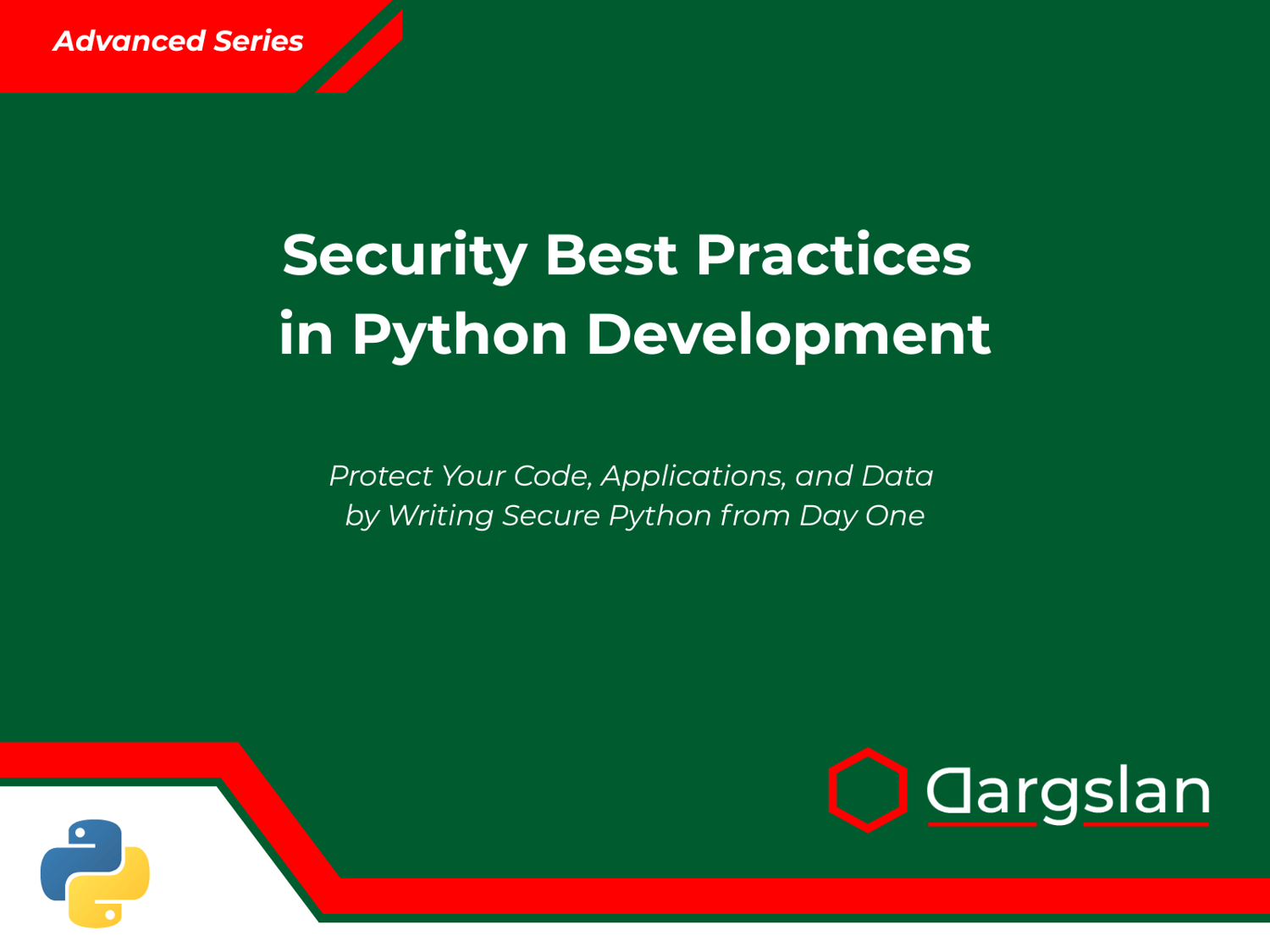
Security Best Practices in Python Development
Security Best Practices in Python Development: Protect Your Code, Applications, and Data by Writing Secure Python from Day One
Is your Python code as secure as you think it is?
In today's threat landscape, security can no longer be an afterthought. Python's simplicity and extensive ecosystem make it a popular choice for rapid development, but this same flexibility can introduce critical vulnerabilities when security isn't prioritized from the start.
Recent statistics reveal a troubling trend:
- 70% of Python applications contain at least one security flaw
- Supply chain attacks targeting Python dependencies increased by 289% since 2020
- The average cost of a data breach has risen to $4.35 million
"Security Best Practices in Python Development" delivers a comprehensive and practical approach to writing secure Python code from the ground up. Whether you're building web applications, data processing pipelines, or enterprise systems, this book equips you with the knowledge and techniques to identify, prevent, and mitigate security vulnerabilities before they become expensive problems.
Who This Book Is For:
- Python developers of all skill levels looking to strengthen their security practices
- DevOps engineers deploying and maintaining Python applications
- Software architects designing secure Python systems
- Security professionals conducting Python code reviews
- Team leads wanting to establish security standards for Python projects
What You'll Learn:
- Build a security mindset that anticipates threats throughout the development lifecycle
- Implement robust input validation to prevent injection attacks
- Manage secrets and sensitive data properly using modern techniques
- Create secure authentication systems with proper password storage
- Protect against the OWASP Top 10 vulnerabilities in a Python context
- Secure your dependency chain against increasingly sophisticated supply chain attacks
- Handle files and data securely to prevent information leakage
- Apply cryptography correctly using Python's libraries
- Develop secure web applications with Flask and Django
- Implement secure logging, monitoring, and deployment practices
This isn't just theory—every chapter includes real-world examples of vulnerabilities, practical code samples, and step-by-step remediation techniques you can apply immediately. Learn from actual security breaches that have affected Python applications and how they could have been prevented.
Inside You'll Find:
- Over 100 code examples showing both vulnerable and secure implementations
- Security checklists for each development phase
- Common pitfalls and misconceptions about Python security
- Tools and libraries that enhance your security posture
- Best practices for secure deployment in container and cloud environments
- Ready-to-use secure configuration templates
By the end of this book, you'll have the knowledge to:
- Write Python code that's resilient against common attacks
- Identify security anti-patterns in existing codebases
- Implement a secure development workflow for your team
- Understand how to respond when vulnerabilities are discovered
- Build security into every phase of development rather than trying to add it later
The digital landscape is increasingly hostile, with attackers becoming more sophisticated every day.
"Security Best Practices in Python Development" arms you with practical defensive techniques that balance security with productivity, helping you ship secure code without slowing down development.
Don't wait for a breach to start taking security seriously.
Whether you're a solo developer, part of a small team, or working in a large organization, this book provides the guidance you need to make security an integral part of your Python development process.
The techniques you'll learn will not only protect your applications, data, and users but also save you from the costly and reputation-damaging effects of security incidents.
Invest in your security skills today—because in software development, prevention is always less expensive than the cure.
About the Author: Dargslan
SEO Keywords (7)
- Python security best practices
- Secure Python programming
- Python application security
- Web application security Python
- Python cryptography implementation
- Preventing code injection Python
- Secure dependency management Python