
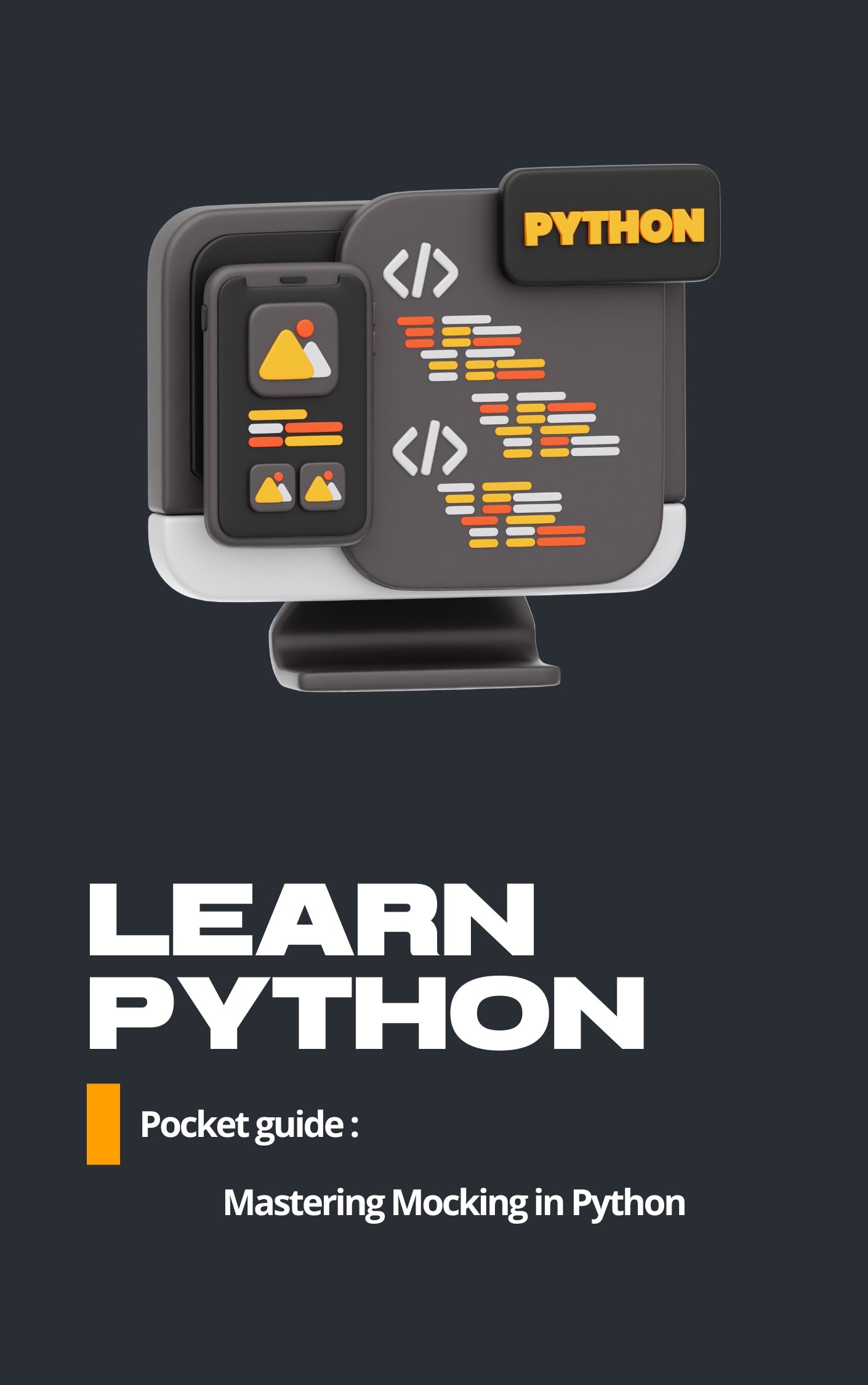
Mastering Mocking in Python
MASTER THE ART OF PYTHON TESTING: THE DEFINITIVE GUIDE TO MOCKING IN PYTHON
In the world of professional Python development, the ability to write effective, maintainable tests separates good programmers from great ones. "Mastering Mocking in Python" is your comprehensive guide to one of the most powerful yet frequently misunderstood testing techniques in the Python ecosystem.
WHY THIS BOOK MATTERS
Testing code with external dependencies—databases, APIs, file systems, or third-party services—presents unique challenges. How do you test your code in isolation? How do you simulate error conditions? How do you ensure your tests run quickly and reliably? The answer lies in mocking.
This definitive guide demystifies Python's mocking libraries, providing you with the knowledge and practical skills to transform your testing approach. Whether you're building web applications, data pipelines, or command-line tools, the techniques in this book will help you write more robust, reliable Python code.
WHAT YOU'LL LEARN
- The core concepts and philosophy behind effective mocking in Python
- Mastery of the unittest.mock library—Python's built-in powerhouse for test isolation
- How to leverage pytest-mock to simplify and enhance your testing workflow
- Techniques for mocking external dependencies including APIs, databases, and file systems
- Advanced strategies for handling complex scenarios like side effects and exceptions
- Best practices for designing mock-friendly code from the ground up
- Real-world testing patterns applied to actual Python code examples
- When to mock and—just as importantly—when not to mock
WHO THIS BOOK IS FOR
This book is perfect for intermediate Python developers looking to level up their testing skills, as well as experienced programmers wanting to refine their approach to mocking. If you're:
- A Python developer who wants to write more reliable, maintainable code
- A software engineer frustrated with flaky tests or slow test suites
- A team lead looking to implement best practices for Python testing
- A quality-focused programmer who values test coverage and reliability
- A developer working with legacy Python code that needs testing
...then this book was written with you in mind.
FROM FUNDAMENTALS TO MASTERY
The book takes a methodical approach, building your knowledge from the ground up:
Chapter 1: Introduction to Mocks - Understanding what mocking is, why it matters, and the philosophy behind test isolation.
Chapter 2: Using unittest.mock.Mock and MagicMock - Mastering the foundational classes that power Python's mocking capabilities.
Chapter 3: Patching with unittest.mock.patch() - Learning to temporarily replace objects during test execution—a critical skill for effective mocking.
Chapter 4: Mocking External Dependencies - Practical techniques for isolating your code from APIs, databases, and other external services.
Chapter 5: Using Side Effects and Exceptions - Advanced strategies for simulating complex behaviors and error conditions.
Chapter 6: Asserting Mock Behavior - Comprehensive coverage of verification techniques to ensure your code interacts correctly with dependencies.
Chapter 7: Using pytest-mock Plugin - Simplifying your testing workflow with pytest's powerful mocking capabilities.
Chapter 8: Mocking Classes, Static Methods, and Properties - Specialized approaches for handling Python's object-oriented features.
Chapter 9: When (and When Not) to Mock - Developing the judgment to know when mocking is appropriate and when other testing strategies are better.
Chapter 10: Structuring Mock-Friendly Code - Design patterns and architectural approaches that make your code easier to test.
Chapter 11: Mocking in TDD and Legacy Code - Applying mocking techniques in test-driven development and when working with existing codebases.
Chapter 12: Testing Your Mocks and Test Code - Meta-testing strategies to ensure your tests themselves are reliable and maintainable.
Each chapter includes practical, real-world examples that you can run and modify yourself, reinforcing concepts and demonstrating best practices in action.
BEYOND THE BASICS: COMPREHENSIVE APPENDICES
The book goes beyond core content with five invaluable appendices:
- unittest.mock API Reference - A comprehensive, easy-to-navigate guide to Python's built-in mocking library.
- pytest-mock Usage Guide - Detailed coverage of pytest's mocking capabilities and how they integrate with the testing workflow.
- Mocking Built-in Functions - Specialized techniques for handling Python's built-in functions in your tests.
- Mocking in Asynchronous Code - Advanced strategies for testing async/await code with mocks.
- Interview Questions on Mocking and Testing - Prepare for technical interviews with common questions and exemplary answers about Python testing.
OVERCOMING COMMON MOCKING CHALLENGES
Python developers frequently encounter specific challenges when implementing mocks in their test suites. "Mastering Mocking in Python" directly addresses these pain points:
- The "Too Many Mocks" Problem - Learn how to avoid the maintenance nightmare of tests with excessive mocking through strategic design choices and testing boundaries.
- The "Mock Verification Hell" Syndrome - Discover techniques to simplify your test assertions and avoid brittle tests that break whenever implementation details change.
- The "What Should I Mock?" Dilemma - Develop a reliable framework for deciding which dependencies to mock and which to test directly.
- The "My Mocks Don't Behave Like Reality" Issue - Master techniques for creating faithful simulations that accurately represent real-world behavior.
- The "My Tests Are Still Slow" Frustration - Learn advanced strategies for optimizing test performance while maintaining thorough coverage.
Each of these challenges is illustrated with before-and-after code examples, showing exactly how to transform problematic tests into clean, effective ones.
ADVANCE YOUR CAREER WITH PROFESSIONAL TESTING SKILLS
Mastery of Python mocking isn't just about writing better tests—it's about advancing your career as a professional developer:
- Technical Interviews - Impress potential employers with sophisticated knowledge of Python testing practices that set you apart from other candidates.
- Code Reviews - Provide more valuable feedback to teammates with a nuanced understanding of testability and mock design.
- Architecture Discussions - Contribute meaningfully to system design conversations with insights about dependency management and testable architectures.
- Technical Leadership - Position yourself for technical leadership roles by demonstrating a commitment to code quality and maintainability.
The testing philosophy and techniques in this book align with practices at top technology companies and successful Python projects, preparing you for professional environments that value code quality.
WHY MOCKING MATTERS IN PYTHON
Mocking isn't just a testing technique—it's a design philosophy that encourages:
- Modularity - By forcing you to think about dependencies, mocking naturally leads to more modular, loosely-coupled code.
- Reliability - Properly mocked tests eliminate flakiness caused by external dependencies, making your test suite consistently reliable.
- Speed - By replacing slow operations (like network requests or database queries) with lightning-fast simulations, mocking dramatically accelerates your test suite.
- Thoroughness - Mocking allows you to test edge cases and error conditions that would be difficult or impossible to trigger with real dependencies.
- Confidence - A comprehensive suite of well-mocked tests gives you the confidence to refactor, optimize, and extend your code without fear of breaking existing functionality.
REAL-WORLD APPLICATIONS
Throughout the book, you'll see how mocking applies to real-world Python development scenarios:
- Testing Flask/Django web applications without hitting actual endpoints
- Verifying data processing pipelines without accessing real data sources
- Validating API clients without making actual HTTP requests
- Testing file processing code without touching the file system
- Simulating rare error conditions and edge cases
Each example is presented with complete, executable code that you can adapt to your own projects.
COMPANION RESOURCES AND MATERIALS
To maximize the value of your learning experience, "Mastering Mocking in Python" comes with several companion resources:
- Downloadable Code Repository - All examples from the book in ready-to-run form, organized by chapter for easy reference.
- Online Exercises - Additional challenges to test and reinforce your understanding of key concepts.
- Cheat Sheets - Quick-reference PDFs summarizing key unittest.mock and pytest-mock features.
- Testing Patterns Library - A collection of reusable testing patterns for common Python development scenarios.
These resources help bridge the gap between reading about concepts and applying them in your own projects, accelerating your mastery of Python mocking.
ABOUT THE AUTHOR
Dargslan is a veteran Python developer with over a decade of experience building and testing Python applications across multiple domains including web development, data engineering, and DevOps automation. As a technical leader who has mentored dozens of developers in testing best practices, Dargslan brings a practical, experience-driven approach to the topic.
Having worked on codebases ranging from early-stage startups to enterprise systems with millions of users, Dargslan has navigated the real-world challenges of testing complex Python applications under various constraints. This book distills those years of experience into a clear, systematic approach to effective mocking.
FREQUENTLY ASKED QUESTIONS
Q: Do I need to be an expert Python developer to benefit from this book? A: No. While the book assumes intermediate Python knowledge (familiarity with functions, classes, and basic testing), all concepts are explained clearly with plenty of examples.
Q: Does this book cover both unittest and pytest frameworks? A: Yes. The core concepts use unittest.mock (Python's built-in mocking library), but the book also covers pytest-mock for those using pytest. The principles apply to both frameworks, and differences are clearly explained.
Q: Is this book up-to-date with the latest Python versions? A: Absolutely. All examples work with Python 3.6+ and are compatible with the latest Python versions. Where relevant, version-specific features or changes are noted.
Q: Will this book help me prepare for technical interviews? A: Yes. The appendix specifically addresses common interview questions about Python testing, and the core concepts covered throughout the book appear frequently in technical interviews for Python roles.
Q: How is this book different from the official documentation? A: While the official documentation explains what features exist, this book focuses on how and when to use them effectively. It provides context, best practices, anti-patterns to avoid, and real-world examples that documentation typically doesn't cover.
ELEVATE YOUR PYTHON SKILLS TODAY
If you're ready to write more reliable, maintainable Python code, "Mastering Mocking in Python" is your definitive guide. The testing techniques you'll learn will not only make you a better tester but a better
Python developer overall—one who builds code with testability, modularity, and reliability in mind from the start.
Keywords
- Python testing
- unittest.mock
- pytest-mock
- Python mock objects
- Python unit testing
- Test-driven development Python
- Python mocking techniques