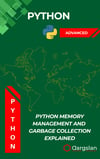
Python Memory Management and Garbage Collection Explained
Python Memory Management and Garbage Collection Explained: Master the Inner Workings of Python's Memory System
Demystify one of Python's most misunderstood mechanisms and write more efficient, performant code today
Memory management in Python happens automatically behind the scenes, making it easy to overlook—until your application crashes with memory errors or slows to a crawl. Whether you're building data pipelines, developing web applications, or creating machine learning models, understanding how Python handles memory is critical for writing production-grade code.
"Python Memory Management and Garbage Collection Explained" delivers the knowledge professional developers need but rarely acquire, taking you deep inside Python's memory allocation system, reference counting mechanisms, and garbage collection algorithms.
What You'll Discover Inside:
- The Complete Memory Lifecycle of Python Objects - Follow the journey of Python objects from creation to destruction, and understand the critical difference between variables and the objects they reference
- Reference Counting Demystified - Learn how Python's primary memory management mechanism works, with hands-on examples using sys.getrefcount() to watch reference counts change in real-time
- Generational Garbage Collection - Explore how Python's garbage collector resolves circular references that reference counting alone can't handle
- Memory Leak Prevention - Identify and fix the surprising ways Python applications can leak memory despite automatic garbage collection
- Practical Memory Monitoring - Master essential tools including tracemalloc, objgraph, and memory_profiler to visualize and diagnose memory issues
- Optimization Techniques - Implement best practices for efficient memory usage, including when to use generators, weak references, and context managers
Why This Knowledge Matters:
Memory management knowledge transforms you from a Python user into a Python master. This comprehensive guide bridges the gap between basic Python tutorials and the detailed understanding needed for production-scale applications.
Packed with executable examples, visualizations, and real-world optimization scenarios, you'll gain practical skills that directly translate to faster execution times, reduced resource usage, and more stable applications.
Who Should Read This Book:
- Python developers looking to level up from intermediate to advanced
- Data scientists and machine learning engineers working with large datasets
- Backend developers building high-performance web services
- DevOps professionals troubleshooting memory-related issues
- Software engineers transitioning to Python from lower-level languages
Beyond The Basics:
Unlike most Python resources that barely scratch the surface of memory management, this book delivers comprehensive coverage, including CPython implementation details, comparison with other languages (C++, Java), and the memory implications of the Global Interpreter Lock (GIL).
The extensive appendices provide ready-to-use debugging scripts, memory profiling templates, and a cheat sheet of the gc module's capabilities—turning complex concepts into practical tools you'll use daily.
Don't wait for memory problems to impact your applications. Gain the knowledge to proactively write memory-efficient Python code that scales.
Scroll up and click "Buy Now" to transform your understanding of Python's inner workings and join the elite ranks of developers who truly comprehend what happens behind the scenes.
Keywords:
- Python memory management
- Python garbage collection
- Memory optimization Python
- Reference counting Python
- Python memory leaks
- Python memory profiling
- Python performance optimization